The O'Connor 1RM Formula
The O'Connor formula, introduced in 1989, provides a straightforward method to estimate your one-rep max (1RM) using submaximal lifts, typically for 2 - 10 repetitions. This guide explores its origins, mechanics, and role in strength training.
Authors of the O'Connor Formula
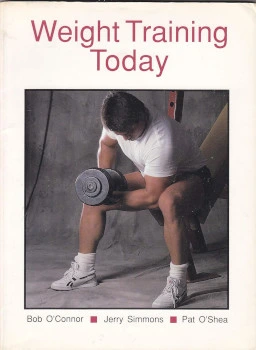
The O'Connor formula was introduced by Bob O'Connor and co-authors Jerry Simmons and Pat O'Shea in their 1989 book Weight Training Today. Jerry Simmons, a renowned strength and conditioning coach with extensive experience in the NFL, including with the New England Patriots, contributed practical expertise to the formula’s development. Pat O'Shea, a professor at Oregon State University, provided academic insights from his work on strength training, including Scientific Principles and Methods of Strength Fitness (1976).
Origin
Published in 1989, Weight Training Today aimed to offer safe and effective strength training techniques for athletes and fitness enthusiasts. The O'Connor formula was introduced as a simple method to estimate one-rep max (1RM) without the need for maximal lifts, thereby reducing the risk of injury. The formula reflects the authors' practical approach to strength assessment, based on their collective experience in coaching and education.
The O'Connor Formula
The O'Connor formula estimates 1RM with the equation:
1RM = weight × (1 + 0.025 × reps)
Where:
- weight is the amount lifted
- reps is the number of repetitions performed
For example, lifting 100 kg for 10 repetitions yields:
1RM = 100 × (1 + 0.025 × 10) = 100 × (1 + 0.25) = 100 × 1.25 = 125 kg
Development of the Formula
The O'Connor formula is a linear model that estimates 1RM based on the weight lifted and the number of repetitions performed. It assumes that each additional repetition increases the estimated 1RM by 2.5%, making it easy to calculate and apply in training settings. The formula's simplicity aligns with the practical focus of Weight Training Today, providing a quick method for coaches and athletes to assess strength levels.
Validation and Accuracy
A 2007 study compared seven 1RM prediction equations, including the O'Connor formula, in 49 older, sedentary adults (aged 53.55 ± 3.34 years) using Hammer Strength Iso-Lateral machines. The study found that the O'Connor formula had higher average errors compared to the Mayhew, Epley, and Wathen formulas, particularly for exercises like leg press and triceps extension, suggesting lower accuracy for machine-based exercises in this population. However, it showed moderate accuracy for free-weight exercises like bench press among athletes, with correlations typically above 0.90 when repetitions are limited to 10 or fewer. A 2019 study on prone bench pull found the O'Connor formula had a coefficient of variation (CV) of 3.44% and intraclass correlation coefficient (ICC) of 0.94, suggesting reasonable reliability for specific exercises.
Ready to estimate your 1RM with the O'Connor formula? Use our 1RM Calculator, explore more Fitness Guides, or Suggest New Tools to enhance MaxCalculator.com.